In The News

US files $4.2-million settlement for fire, explosion at former South Philadelphia refinery

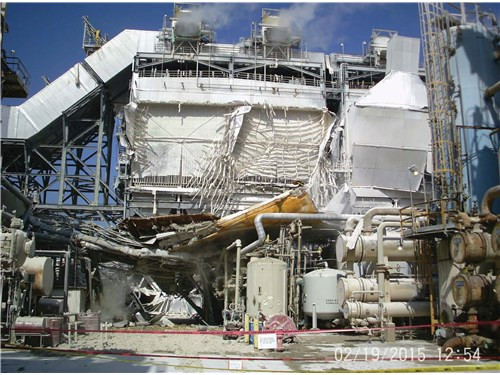
From the Oil & Gas Journal Oct 8, 2024 The US government filed a $4.2 million settlement with Philadelphia Energy Solutions Refining and Marketing LLC (PES) for Clean Air Act penalties related to the June 21, 2019, fire and explosion at its former South Philadelphia refinery.

The fire and explosion at the 335,000 b/d refining complex prompted a temporary shelter-in-place for area residents and injured five refinery workers (OGJ Online, June 21, 2019). PES and its subsidiaries filed for Chapter 11 federal bankruptcy protection a month later (OGJ Online, July 22, 2019).

The Environmental Protection Agency (EPA) said the settlement, filed in US Bankruptcy Court, represents the largest Clean Air Act 112(r) penalty it has ever imposed for a single incident. That section of the CAA requires infrastructure owners and operators to ensure that regulated and other “extremely hazardous substances” are managed safely, EPA said in a press release. 

The agency alleges that PES violated the rule that compels plants to identify and assess the hazards posed by regulated substances, develop an accident-prevention program to reduce the risk of accidental releases, and create an emergency-response program. 

“The company violated these requirements by, among other things, failing to ensure that its refining operations, particularly the hydrofluoric acid unit, were designed, built and operated in accordance with recognized and generally accepted good engineering practices,” EPA notes. The settlement marks EPA’s final settlement with PES, the agency said.

The settlement stems from the 2019 explosion and fire at the Pemex Philadelphia Refinery which included a release of HF. (The HF fortunately caused no injuries itself as it was evidently destroyed in the explosion). (See our report Wake-up Call: Refinery Disaster in Philadelphia from July 2023 for more information about the disaster. It gives details of the sequence of events, and points out that the safeguards to prevent an HF release they had in place DID NOT FUNCTION.)

TRAA Member sends Citizen Petition to EPA regarding Title-V Permit

Dr. Genghmun Eng submitted a Formal Petition to the EPA Administrator at the US EPA National Headquarters (HQ), objecting to the Region 9 US EPA acceptance of the Title-V Permit Renewal from the SCAQMD as-is for the Valero Ultramar HF Refinery in Wilmington. Although the Region 9 Staff accepted the SCAQMD Permit Renewal version, they suggested that Gengh submit a Formal Petition to the US EPA HQ about his concerns. However, he was warned that US EPA Formal Petitions have a lot of additional requirements, as compared to a simple Public Comment.
Gengh completed his Formal Petition to the US EPA HQ within the limited timeframe allowed, citing numerous deficiencies and outright errors in the permit and its processes, as well as requesting specific needed permit additions and modifications, both being required by the Petition process. He showed that many documents submitted by the refinery operator, which were the basis of the SCAQMD and US-EPA acceptance of the Permit Renewal, were either incomplete or deliberately misleading.
In addition, the US EPA Region 9 Staff sent Gengh a formal letter, stating: “Please note that we cannot object to a permit based on concerns about health and safety that are not related to a Clean Air Act {CAA}”. The CAA was passed in 1970, and the US EPA was also created in 1970 to enforce the CAA.
However, the HF-Alkylation systems were only installed at the Torrance Refinery in 1966, at the Valero Ultramar Refinery in 1969. As ‘new technology’ back then, the refinery industry also created models where even a massive HF release was deemed nearly 100% ‘safe’, because their models claimed that the HF would just fall to the ground as ‘rainout’, and be rendered harmless by means unspecified and unknown. This assumption that HF was nearly 100% ‘safe’ is probably why HF risks are not prominent in the CAA. This ‘rainout’ model was the universal industry belief, and the 1987 Koopman ‘Goldfish’ tests in the Nevada desert released 1000 gallons (about 8000 pounds) of pure HF were conducted to prove that this model was correct. So the Koopman test had collection pans all along the HF release path, to collect the ‘rainout’.
Unfortunately, those tests showed ZERO ‘rainout’. Instead, a massive ground-hugging HF cloud formed, which would have been toxic within minutes to humans 2-3 miles away. So HF went from being nearly 100% ‘safe’ by assumption, to being nearly 100% ‘unsafe’ by test.
As a result, Gengh’s Formal Petition claims that the US EPA erred in 1987, by not demanding an HF phaseout back then, when those Koopman test data first became known. His Petition also requests that the US EPA now correct this historical error by requiring an HF/MHF Phase-Out at the Valero Ultramar Wilmington HF Refinery, as part of their Title-V Permit Renewal. We, the Public, will see what happens next in the coming months. Here is the complete Document.

EPA tightened refinery regs. Why did emissions rise?

Article from E&ENews by Politoco

EPA launched a landmark update to oil refinery regulations almost a decade ago that was supposed to deliver big cuts to the industry’s vast stock of hazardous air pollutants. …

But the toughened rules haven’t delivered for everyone, POLITICO’s E&E News has found in an investigation. In the Salt Lake City area, releases from a Big West Oil plant almost quadrupled during the same period, from about 48,000 pounds to 170,000 pounds. At a Torrance, California, refinery owned by PBF Energy, emissions rose some 75 percent, from about 165,000 pounds to almost 293,000 pounds. Around both plants, the proportion of low-income residents and people of color similarly exceeds the respective state and national averages.

CSB Launches Investigation into Another Release of Toxic HF at Honeywell Facility in Louisiana

Washington D.C. June 10, 2024 – Today, the U.S. Chemical Safety and Hazard Investigation Board (CSB) announced that it is deploying a team of chemical incident investigators to investigate a release of highly toxic hydrofluoric acid (HF)  that occurred last Friday, June 7, 2024, at the Honeywell International Fluorine Products facility in Geismar, LA, that seriously injured a worker there

Honeywell reported that a contract maintenance employee was exposed to the HF while performing maintenance activities at the facility. The worker was hospitalized because of the exposure

Temporary office burns at Torrance refinery

According to the Daily Breeze, “a vacant work trailer caught fire at the Torrance Refining Company on Saturday, June 1, though officials said operations at the refinery were not impacted.” Daily Breeze link

It is worth noting that the refinery also endured an Unplanned Flaring Event on 05/30/2024 at 05:57 AM, the eighth unplanned event so far this year.

For the latest incident, Supervisor Janice Hahn posted:

Three temporary offices burned at the Torrance Refinery this weekend.

Worth remembering that this refinery is one of two in the state that uses highly toxic MHF. This fire is a reminder that accidents happen — and the wrong accident at this refinery could mean a mass casualty event.

MHF is too dangerous to have in our refineries and our communities will not be safe until it is gone.

Toyota adds hydrogen system at Long Beach terminal close to Valero HF alkylation unit.

EPA RMP WCS

State, Long Beach city and Port of Long Beach officials joined with Toyota Motor North America and FuelCell Energy this week to cheer the grand opening of the Tri-gen system that generates renewable hydrogen, electricity and water to support Toyota’s largest port facility on the continent. (See the Daily Breeze Article for more).

The Toyota Logistics Services Distribution Center Referred to in this attached article Is 4400 ft from the Valero Refinery’s alkylation unit. (See the map above).

Are they aware that they are in the high-risk area of an HF release from the Valero Refinery? Perhaps someone should warn them, or notify the Daily Breeze or other local newspaper.

Hydrofluoric Acid: What You Need to Know

An excellent article by paramedic Bradley Denney who suffered HF burns from a refinery accident. It gives much information about HF – its properties, dangers, treatment and its transport – in great detail.

Bradley Denney, RN/MICT, has been involved with the fire service for over 38 years and EMS for over 36 years. He has worked as a frontline firefighter and EMT to assistant fire chief and hazardous materials technician and paramedic. In 2007, he became a registered nurse. He has taught hazmat courses for fire, law enforcement and EMS, and taught HF-specific classes at the Kansas HazMat/WMD Symposium in 2006 and 2007. He also has over 15 years of experience working with HF acid in the oil refining industry. He was instrumental in initiating first aid protocols in the refinery emergency facility setting that ultimately would save his life.

Read the entire article from EMSWORLD here. The following, taken from the article, is part of his story:

I became interested in HF while working in an oil refinery that uses it as a catalyst to make high-octane gasoline. As a paramedic, I found the effects of HF on the human body fascinating. I learned what I could about it and began teaching HF safety to my coworkers.

Then, in 2001, I was involved in an HF incident in which I was seriously exposed. I had been sprayed with anhydrous HF at approximately 150 pounds of pressure when a ¾” pipe broke at an ell as I was preparing to remove a plug. The HF had eaten the threads inside the ell and the weight of my pipe wrench caused the damaged pipe to give way, spraying both my legs just below my groin, and my right forearm. That exposure began a battle for my life that continues today.

Luckily, our local EMS and emergency facility had been trained on the dangers of this acid and proper treatment. Many EMS and ER personnel have probably never heard of this dangerous compound, but all emergency services, fire or law enforcement personnel who operate near and may be called to respond to any facility that uses or manufactures a form of HF should receive yearly training on treatment for HF exposure. This information should be available from your county LEPC.

After I was burned, the HF acid penetrated the Nomex coveralls I was wearing under my coat. (The photo of my left leg shows the flame pattern caused by the splatter from acid hitting my right leg.) The fluoride immediately penetrated the skin and bound to the calcium and magnesium in my blood and body tissues, which caused severe heart arrhythmias about 1 hour post-burn.

I was flown by helicopter to a burn center at Hillcrest Hospital in Tulsa, Oklahoma. There, despite the fact that I had at least 16% BSA, the burn center doctors and cardiologist refused to let me die. They called all over the world, looking for help from HF specialists and were told, “Make him comfortable, let his family say goodbye, and let him go.” Thank God, they refused and kept working on me. They stopped counting the defibrillator shocks after 15. (By the way, THAT HURTS!!!) By the grace of God, a very dedicated nurse, and those stubborn doctors, I am still here.

U.S. Chemical Safety Board Launches Investigations Into Chemical Incident at HF plant in Louisiana

Washington, D.C. April 4, 2024 – Today, the U.S. Chemical Safety and Hazard Investigation Board (CSB) announced that the agency has launched investigations into toxic chemical releases at two facilities in Louisiana during 2023: the release of hydrogen fluoride (HF) and chlorine at the Honeywell Performance Materials and Technologies facility in Geismar, LA in January 2023, and the release of ethylene oxide (EtO) at the Dow Chemical Louisiana Operations facility in Plaquemine, LA in July 2023.

Both incidents were reported to the CSB in accordance with the agency’s Accidental Release Reporting Rule (40 CFR Part 1604). (See the full announcement here).

On January 23, 2023, a heat exchanger ruptured at the Honeywell facility in Geismar, LA, resulting in an explosion and the release of approximately 870 pounds of hydrogen fluoride (HF) and 1,700 pounds of chlorine. Fortunately no one was injured, but officials had to close nearby highways as a caution.

AQMD Explains Torrance Refinery HF Incident

On Tuesday, March 26th there was a Torrance Alert saying: “Torrance Alerts: Public – Refinery Incident [Torrance Refining Company] ALL CLEAR Information from TFD” along with a link to the alert website (which has now expired).

Normally there is an alert issued when the incident begins, to warn people to avoid the area, but not in this case.

TRAA contacted the AQMD, who finally replied with the following explanation:

Thank you for reaching out. My staff responded to an incident at the
Torrance Refinery’s Alkylation Unit on the evening of March 26. At
the time of staff’s arrival, there were no closures at Crenshaw
Blvd. We were advised by TRC operators that a laser path sensor
detected a minor MHF leak. An isobutane leak with suspected trace
amounts of MHF in the feed occurred at a flange in the Alkylation
Unit. Our staff observed discoloration at the flange and did not
observe any other evidence inside the Alkylation Unit that would
demonstrate additional leaks or unusual activity. The affected flange
was removed from service for repairs. No point sensors or fenceline
monitors detected the leak. Torrance Fire Department responded to
this incident, but LA County Hazmat did not respond. I hope this
addresses your concerns. Enjoy the rest of your day.

Sincerely,

Kevin Orellana

Senior Enforcement Manager
Refinery/Energy/Retail Gasoline Dispensing
Office of Compliance and Enforcement
South Coast Air Quality Management District

TRAA learned informally that Crenshaw Boulevard may have been closed, which is why we ask them about it specifically. (The important thing about Crenshaw is that the fence line monitors do not run along that street which is about 500 feet from the HF tanks. It’s treated as part of the refinery so the first fence line monitors to the east are over a half a mile from the alkylation unit and the HF/MHF.)

We don’t know the timeline for when the AQMD reached the plant. We also contacted the refinery itself but they never answered. We also contacted the city and several city council members, but they did not answer Before the AQMD responded.

We are relieved that it was a minor HF leak, but wonder why the Torrance Alert system did not provide us the warning we should expect.

US EPA adopts halfway measures that fails to protect communities from hydrofluoric acid (HF)

On March 1, the EPA released its Chemical Disaster Prevention Rules. Following that, TRAA released this Press Release:

The US Environmental Protection Agency (EPA) today announced the release of a final revision to the Risk Management Plan (RMP) rule governing 11,740 facilities using dangerous chemicals, including 40+ oil refineries that use hydrofluoric acid (HF), a deadly chemical capable of causing thousands of deaths in a few minutes. (see attached “Summary Info Sheet”) (link)

The new RMP rule includes many positive improvements and states its goal is “to protect the health and safety of all communities by requiring industry to prevent accidental releases of dangerous chemicals that could otherwise cause deaths and injuries, damage property and the environment, or require surrounding communities to evacuate or shelter-in-place”. EPA 3/1/24. For some positive developments see the statement from Environmental Justice & Health Alliance (link).

However, the Rule fails to protect vulnerable Environmental Justice burdened communities living near HF refineries in 20 states. The EPA recognized that HF units are vulnerable to accidents, natural disasters, and terrorist acts. However, the new rule does not meet the standard set by California Attorney General Rob Bonta and 20 other State AGs in their 2022 letter to the EPA which quoted the US Chemical Safety Board saying that it is “fully within the authority and responsibility of the EPA pursuant to …the [Chemical Disaster Rule] Risk Management Plan (RMP) Rule (40 CFR Part 68.67) as well as through its General Duty Clause.” … “to impose a robust safer technology protocol that will drive the remaining hydrofluoric acid-using refineries to identify and implement safer alternatives”  

(Full letter available on request, excerpts (link to AG excerpts)).

The new rule makes significant improvements over the Trump era version by restoring the requirement that HF refineries do an analysis of safer alternatives. It adds for the first time requirements to analyze the “practicality” of these alternatives, requiring HF refineries to state why they are not using safer chemicals. This provides the EPA a tool to “influence” HF refineries toward implementation of conversion. Many of the improvements over the draft rule stem from grass roots advocacy. For example, the United SteelWorkers scored victories in the significant expansion of worker participation in safety processes.

Many of the HF dangers highlighted by TRAA, as well as those alerted to by national security experts, are referenced in the EPA release. Nonetheless, TRAA sees this rule as a three-legged stool without its 3rd leg. Without requiremening conversion to a safer alternative, the rule does little to protect the community from a catastrophic, and potentially deadly, release of HF.

There are significant improvements in response to community demands but for the 14 million people living around HF refineries and the nearly 1,000,000 in Los Angeles County alone, this effort by the Biden administration to improve on the terrible record of the Trump administration is shockingly inadequate. Especially, when it is well known that President Biden and his family live within the circle of risk for the Trainer, Pennsylvania HF refinery. TRAA will not stop calling for exceptional action at the local, state or federal level to remove this exceptional danger of mass casualties.

For Further background info with video links go to http://www.TRAA.Website