TRAA Response to the Explosion and Fire at the Chevron Refinery

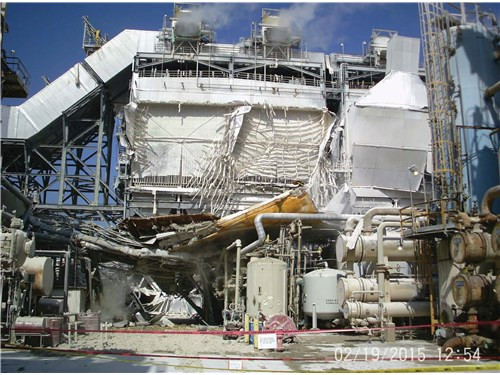
On Thursday evening a huge explosion and fire engulfed the Chevron Refinery in El Segundo. (See reports in the Daily Breeze and the Los Angeles Times).

In response, TRAA has issued the following statement:

The Torrance Refinery Action Alliance (TRAA) is deeply concerned, yet not surprised, about the explosion and fire at the Chevron El Segundo Refinery. While we are glad to hear there have been no reported injuries or deaths, the incident reminds everyone in the South Bay of the inherent dangers of petroleum refining, especially in such proximity to densely populated areas. We are also deeply concerned for the safety of the refinery workers who are closest to danger.

While the El Segundo Refinery did not use Hydrofluoric Acid (HF), the incident nonetheless demonstrates why threatening chemicals such as HF should not be stored on refinery premises where they are subject to accidental release. Refineries in the South Bay must take immediate action to phase out hazardous chemicals, like HF, to ensure that their workers and the communities that surround them are safe from catastrophic releases. Ironically, Chevron has been a leader in this field having developed a commercially proven alternative, successfully converted their one HF unit in Utah and sold it to other HF refineries.

We also urge elected officials and regulatory agencies to take action. Today’s fire serves as a wake-up call for those in government to heed the warnings our organization has been making to them for ten years. We demand there be a serious effort to remove hazardous chemicals, like HF, from refineries that have consistently proven themselves to be unsafe to the people around them. 

In a related article, the Times reports on the history of safety and environmental violations at the Chevron Refinery, and how little is being done. And it was considered one of the better refineries in the area.

NRDC and Others Sue EPA over HF

Community and environmental groups filed suit to force the U.S. Environmental Protection Agency (EPA) to address the threat of an unnecessary and dangerous chemical used in dozens of American refineries despite its potential to form toxic acid clouds.

Natural Resources Defense Council (NRDC), Clean Air Council (CAC) and Communities for a Better Environment (CBE) are filing the suit after the EPA rejected the groups’ petition to address the needless risks from use of hydrogen fluoride (HF)—an extremely corrosive chemical that, if released to the air, can form a lethal, ground-hugging plume that can travel for miles, causing severe injury or death to anyone in its path. More than forty oil refineries across the country—currently owned by companies including ExxonMobil, Marathon, Valero, and Delta Airlines, among others—use HF.

TRAA has been collaborating on this effort for over a year and a half. We are not a client but a collaborator and encouraged by the filing of this lawsuit.

Read more from the NRDC Press Release.

2 dead, 35 injured after chemical leak of hydrogen sulfide at Texas oil refinery

From USA Today, Oct 11, 2024 At least two people are dead, and nearly three dozen others suffered injuries after a chemical leak at an oil refinery Thursday, prompting a shelter-in-place order for two East Texas cities, officials said.

The leak took place at Pemex Deer Park, about 18 miles east of Houston, the Harris County Sheriff’s Office said.

Also the local news station reported: Following a release of chemicals at the PEMEX facility in Deer Park, several surrounding residents sought medical treatment, according to Houston attorney Ryan Zehl.

“They started experiencing headaches, nausea, irritation, shortness of breath, symptoms typically associated with hydrogen sulfide poisoning,” Zehl said. “And so, they went to go get medical treatment and it turned out they were diagnosed with hydrogen sulfide poisoning.”

Zehl said he is representing six people form the surrounding neighborhood and he is also speaking with contractors working in the facility at the time of the release.

“What we know so far is that a valve opened that shouldn’t have opened and released hydrogen sulfide,” Zehl said.

This last statement shows the peril of storing massive amounts of deadly hazardous materials. In addition to natural disasters, accidents and sabotage threats, a simple mistake can kill. And HF is far more deadly than the hydrogen sulfide in this event.

Hydrofluoric Acid: What You Need to Know

An excellent article by paramedic Bradley Denney who suffered HF burns from a refinery accident. It gives much information about HF – its properties, dangers, treatment and its transport – in great detail.

Bradley Denney, RN/MICT, has been involved with the fire service for over 38 years and EMS for over 36 years. He has worked as a frontline firefighter and EMT to assistant fire chief and hazardous materials technician and paramedic. In 2007, he became a registered nurse. He has taught hazmat courses for fire, law enforcement and EMS, and taught HF-specific classes at the Kansas HazMat/WMD Symposium in 2006 and 2007. He also has over 15 years of experience working with HF acid in the oil refining industry. He was instrumental in initiating first aid protocols in the refinery emergency facility setting that ultimately would save his life.

Read the entire article from EMSWORLD here. The following, taken from the article, is part of his story:

I became interested in HF while working in an oil refinery that uses it as a catalyst to make high-octane gasoline. As a paramedic, I found the effects of HF on the human body fascinating. I learned what I could about it and began teaching HF safety to my coworkers.

Then, in 2001, I was involved in an HF incident in which I was seriously exposed. I had been sprayed with anhydrous HF at approximately 150 pounds of pressure when a ¾” pipe broke at an ell as I was preparing to remove a plug. The HF had eaten the threads inside the ell and the weight of my pipe wrench caused the damaged pipe to give way, spraying both my legs just below my groin, and my right forearm. That exposure began a battle for my life that continues today.

Luckily, our local EMS and emergency facility had been trained on the dangers of this acid and proper treatment. Many EMS and ER personnel have probably never heard of this dangerous compound, but all emergency services, fire or law enforcement personnel who operate near and may be called to respond to any facility that uses or manufactures a form of HF should receive yearly training on treatment for HF exposure. This information should be available from your county LEPC.

After I was burned, the HF acid penetrated the Nomex coveralls I was wearing under my coat. (The photo of my left leg shows the flame pattern caused by the splatter from acid hitting my right leg.) The fluoride immediately penetrated the skin and bound to the calcium and magnesium in my blood and body tissues, which caused severe heart arrhythmias about 1 hour post-burn.

I was flown by helicopter to a burn center at Hillcrest Hospital in Tulsa, Oklahoma. There, despite the fact that I had at least 16% BSA, the burn center doctors and cardiologist refused to let me die. They called all over the world, looking for help from HF specialists and were told, “Make him comfortable, let his family say goodbye, and let him go.” Thank God, they refused and kept working on me. They stopped counting the defibrillator shocks after 15. (By the way, THAT HURTS!!!) By the grace of God, a very dedicated nurse, and those stubborn doctors, I am still here.

US EPA adopts halfway measures that fails to protect communities from hydrofluoric acid (HF)

On March 1, the EPA released its Chemical Disaster Prevention Rules. Following that, TRAA released this Press Release:

The US Environmental Protection Agency (EPA) today announced the release of a final revision to the Risk Management Plan (RMP) rule governing 11,740 facilities using dangerous chemicals, including 40+ oil refineries that use hydrofluoric acid (HF), a deadly chemical capable of causing thousands of deaths in a few minutes. (see attached “Summary Info Sheet”) (link)

The new RMP rule includes many positive improvements and states its goal is “to protect the health and safety of all communities by requiring industry to prevent accidental releases of dangerous chemicals that could otherwise cause deaths and injuries, damage property and the environment, or require surrounding communities to evacuate or shelter-in-place”. EPA 3/1/24. For some positive developments see the statement from Environmental Justice & Health Alliance (link).

However, the Rule fails to protect vulnerable Environmental Justice burdened communities living near HF refineries in 20 states. The EPA recognized that HF units are vulnerable to accidents, natural disasters, and terrorist acts. However, the new rule does not meet the standard set by California Attorney General Rob Bonta and 20 other State AGs in their 2022 letter to the EPA which quoted the US Chemical Safety Board saying that it is “fully within the authority and responsibility of the EPA pursuant to …the [Chemical Disaster Rule] Risk Management Plan (RMP) Rule (40 CFR Part 68.67) as well as through its General Duty Clause.” … “to impose a robust safer technology protocol that will drive the remaining hydrofluoric acid-using refineries to identify and implement safer alternatives”  

(Full letter available on request, excerpts (link to AG excerpts)).

The new rule makes significant improvements over the Trump era version by restoring the requirement that HF refineries do an analysis of safer alternatives. It adds for the first time requirements to analyze the “practicality” of these alternatives, requiring HF refineries to state why they are not using safer chemicals. This provides the EPA a tool to “influence” HF refineries toward implementation of conversion. Many of the improvements over the draft rule stem from grass roots advocacy. For example, the United SteelWorkers scored victories in the significant expansion of worker participation in safety processes.

Many of the HF dangers highlighted by TRAA, as well as those alerted to by national security experts, are referenced in the EPA release. Nonetheless, TRAA sees this rule as a three-legged stool without its 3rd leg. Without requiremening conversion to a safer alternative, the rule does little to protect the community from a catastrophic, and potentially deadly, release of HF.

There are significant improvements in response to community demands but for the 14 million people living around HF refineries and the nearly 1,000,000 in Los Angeles County alone, this effort by the Biden administration to improve on the terrible record of the Trump administration is shockingly inadequate. Especially, when it is well known that President Biden and his family live within the circle of risk for the Trainer, Pennsylvania HF refinery. TRAA will not stop calling for exceptional action at the local, state or federal level to remove this exceptional danger of mass casualties.

For Further background info with video links go to http://www.TRAA.Website